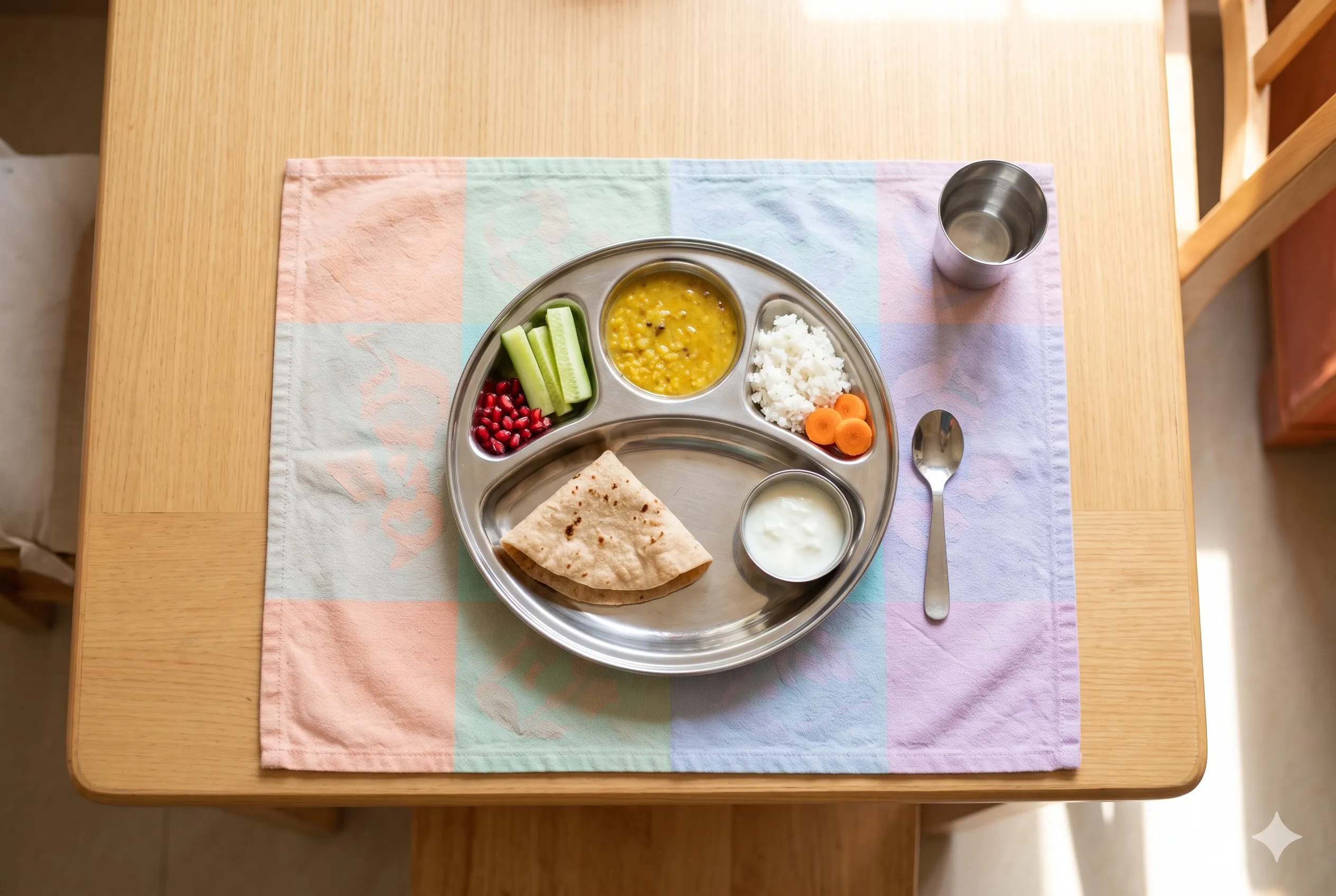
Happy mealtimes with a choosy eater
Calm, no-pressure ideas for the child who pushes the beans to the side: small portions, eating together and a colourful thali.
What the WHO actually recommends for under-fives, plus easy swaps, screen-free zones and rainy-day ideas for a busy Indian home.
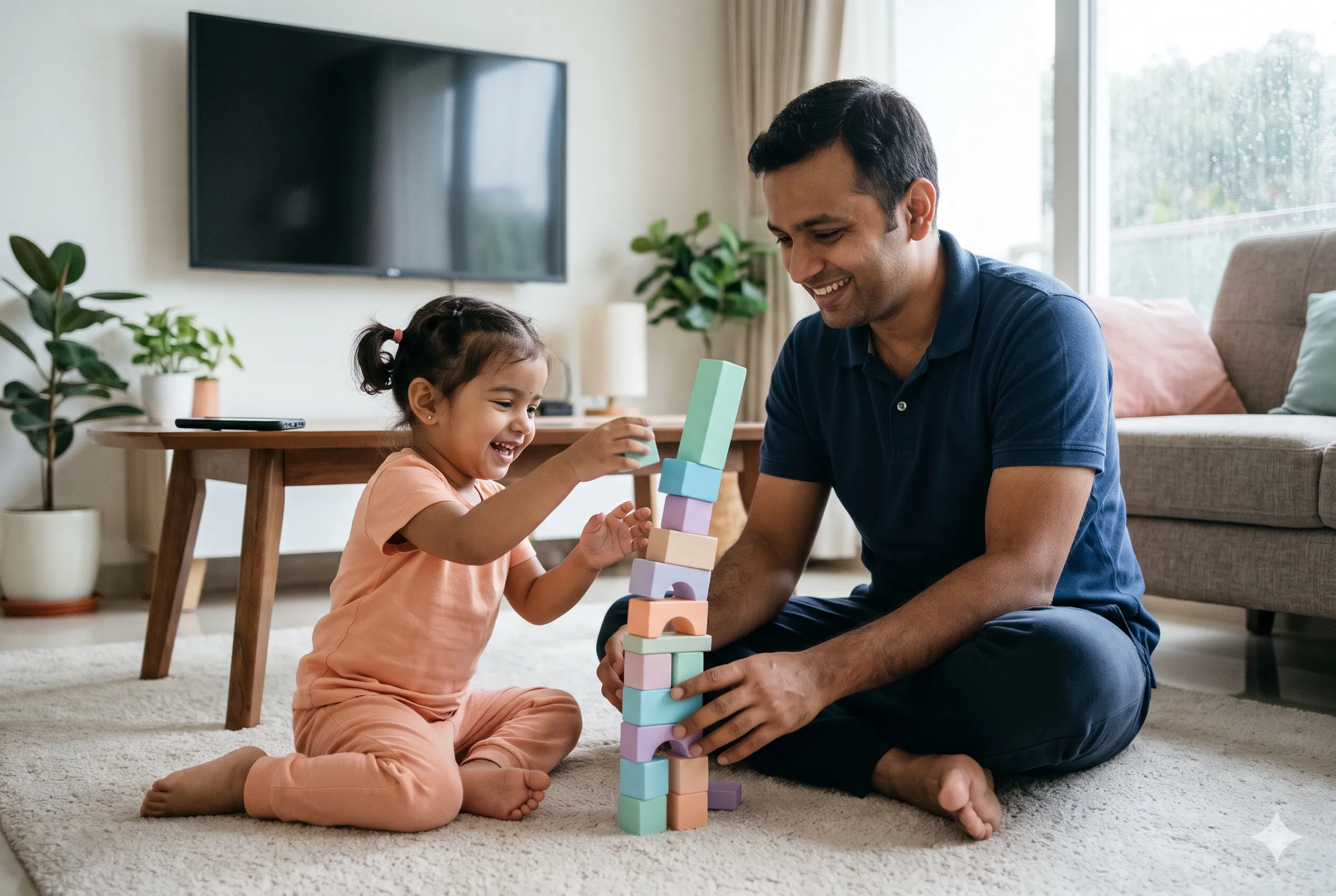
It is late afternoon, it has been raining since lunch, the pressure cooker is whistling and your three-year-old wants one more video. If that sounds familiar, you are not alone, and this is not a guide to feeling guilty. It is a handful of small, realistic changes that make screens a smaller part of the day.
In 2019 the World Health Organization published guidelines on physical activity, sedentary behaviour and sleep for children under five. On screens, they are short and clear:
The same guidelines encourage reading and storytelling with a caregiver whenever a young child is sitting still. Think of the hour as a ceiling, not a target.
These guidelines cover children under five, so they give no number for five- and six-year-olds. The same spirit is a sensible guide, and your paediatrician can help you decide what suits your child.
Taking a screen away leaves a gap, and a bored toddler will fill it loudly. It works better to have something ready to put in its place:
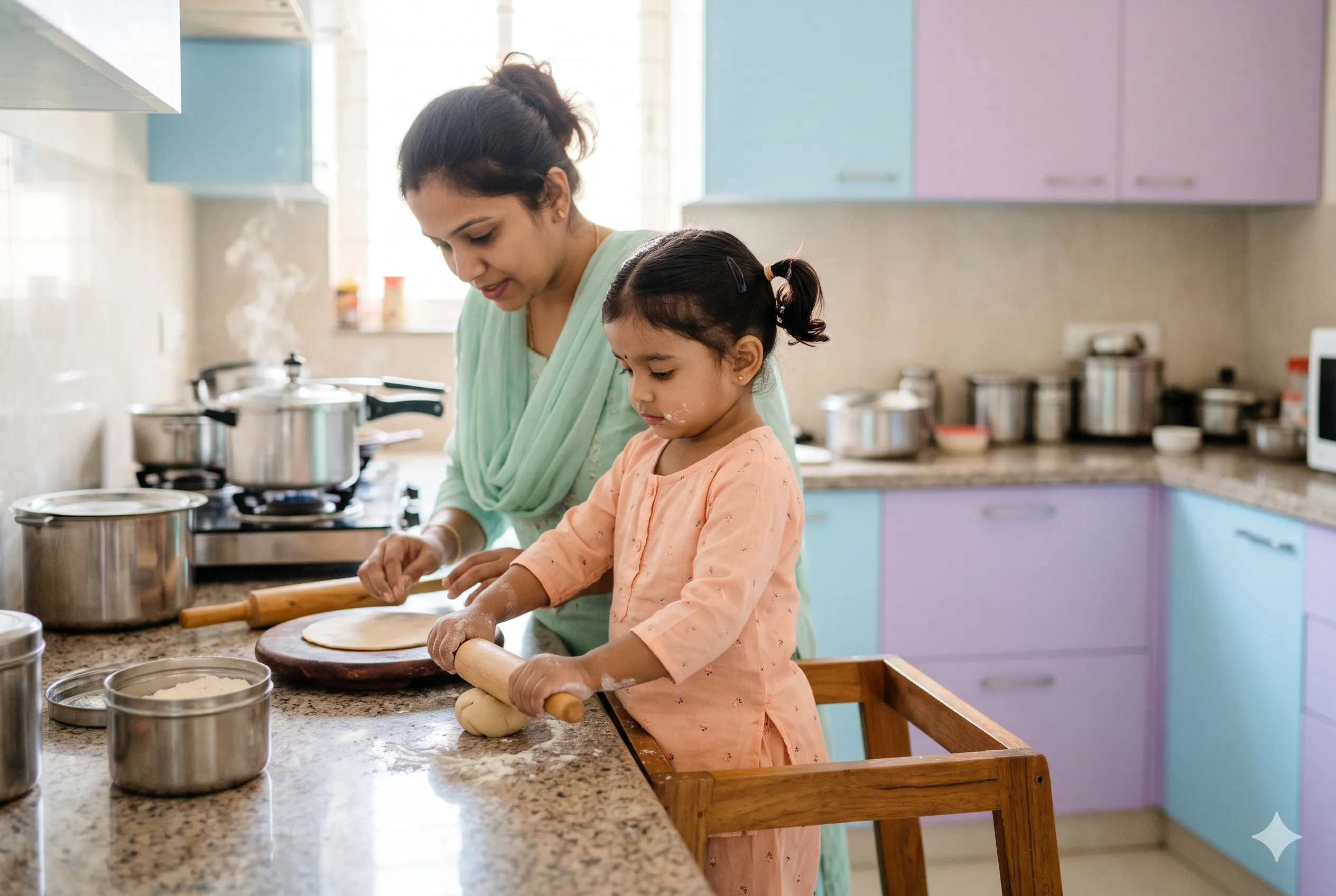
Think of the hour as a ceiling, not a target.
Rules about places are easier to keep than rules about minutes, because nobody has to watch the clock. Two good places to start:
Some screen time is part of modern family life. When it happens, a few habits make it gentler:
In many homes, children spend long hours with grandparents or a nanny while parents work. Screens often appear because they are the easiest way through a long afternoon, not because anyone is careless. Talk it through kindly rather than handing over a list of rules:
Many families see a video call with a grandparent who lives far away as different from cartoons, because the child is talking and listening to someone they love. That is your family's choice to make.
Little ones watch us far more closely than they watch any screen. If they see a parent scrolling at the dinner table, they learn that phones belong there. Try leaving your own phone in another room during meals and for the first hour after you come home.
When you do pick it up, say what you are doing: “I'm checking when Ajji's bus arrives.” It shows that a phone is a tool you use for a reason, then put down.
Bengaluru's rain can keep everyone indoors for hours. Keep this list on the fridge:
Keep small things such as beads and dry beans away from under-threes, as they can cause choking. Keep button batteries well out of reach of all young children: the NHS warns they can cause severe internal burns if swallowed.
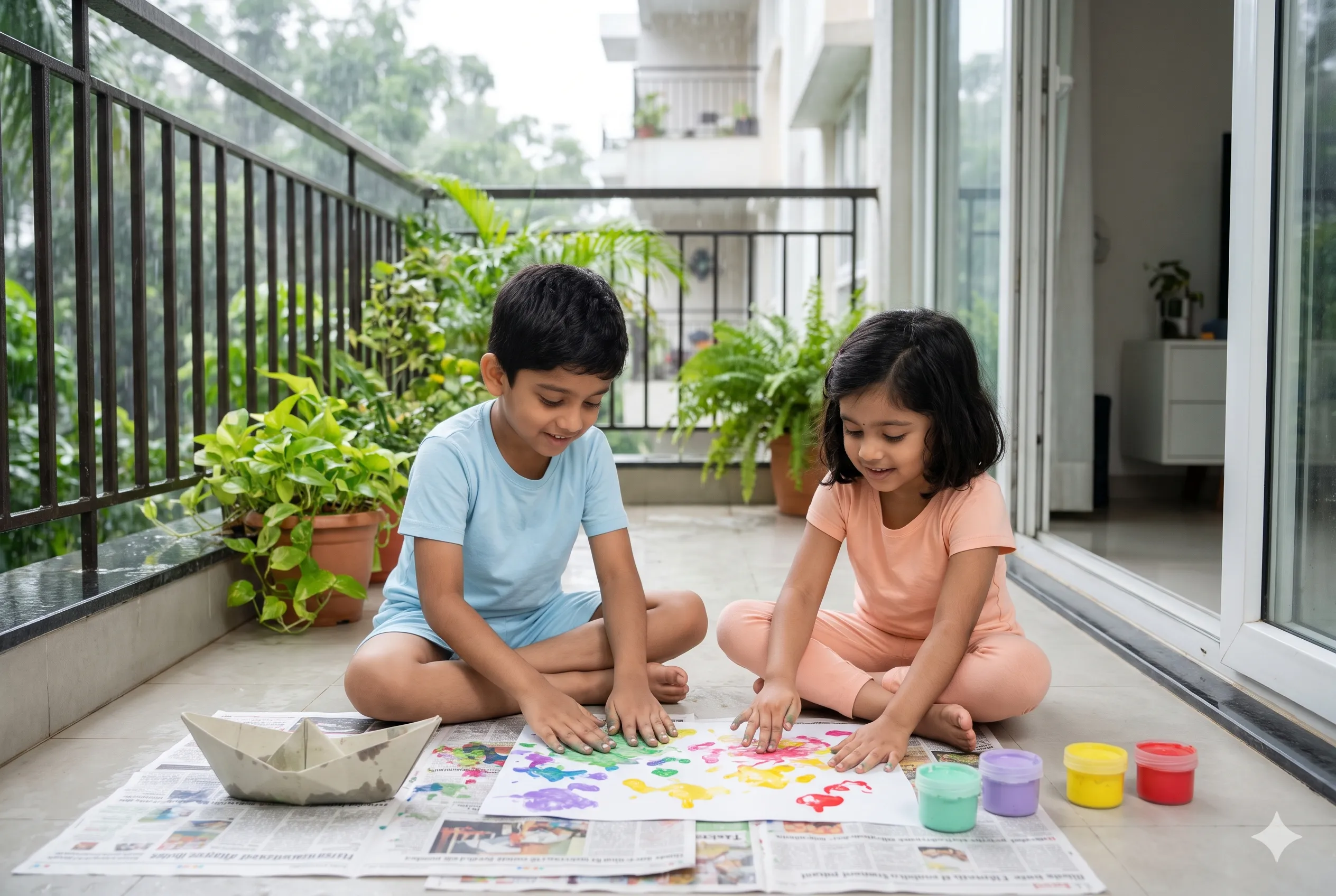
Some days will have more screen time than you planned: a fever, a work deadline, a long journey. That is normal. What matters is the pattern across weeks, not one hard afternoon. Pick one change from this list, try it for a week, and add another when it feels easy.
At Crossmaze, our Montessori-based approach is built on visual, practical, hands-on learning, because children under five learn best by seeing and doing. The same is true at home: a lump of dough, a stack of blocks and a grown-up who joins in go a long way.
Tour the classrooms, meet the teachers and find the right program for your child.
Calm, no-pressure ideas for the child who pushes the beans to the side: small portions, eating together and a colourful thali.
Simple, calm words and everyday habits that help children aged two to six understand body safety and know they can always tell you.
Visiting preschools? What to look for in the rooms, the questions worth asking, and why your own gut feeling counts.