Learning hides in everyday moments at home
Pouring water, counting idlis, matching socks: simple jobs at home that build maths, language and independence, with ideas for ages 2 to 6.
Meltdowns are a normal part of growing up. Calm, simple ways to help children aged 2 to 6 name their feelings and find their way back to calm.
The block tower falls, and a happy three-year-old turns into a storm of tears and stamping feet. Moments like this happen in every home and classroom. They are not a sign that anything is wrong; they are a chance to teach a skill your child will use for life.
Young children feel things fully, but the part of them that says “wait, let’s think about this” is still being built. Harvard University’s Center on the Developing Child explains that the skills behind self-control start to develop soon after birth, grow especially fast between about three and five years old, and keep developing through the teenage years into early adulthood.
So when a two-year-old melts down because the banana broke in half, or a five-year-old storms off after losing a game, they are not being naughty. Their feelings have simply run ahead of their skills. Our job is not to stop the feelings but to lend children our calm and, bit by bit, teach them what to do next.
Know the usual triggers too: hunger, tiredness, too much noise and sudden changes, such as leaving the park or turning off a cartoon. A snack, a rest or a five-minute warning prevents more storms than clever words afterwards.
Children can’t manage a feeling they have no words for. Naming it out loud, without judging it, is the first step: “You’re really angry that the tower fell.” It shows you understand, and slowly gives them words to use themselves.
It changes with age:
Use your home language too: feelings words in Kannada, Tamil, Hindi or English all count, and grandparents can join in.
Our job is not to stop the feelings but to lend children our calm.
In the middle of a meltdown, a child is too upset to take in a lesson. This is the moment to say less and be there more.
Your calm rubs off on your child, and so does your stress. If your own temper rises, take a slow breath first. Saying “I need a moment to calm down too” shows your child exactly what calming down looks like.
If parents and grandparents share the care, agree together on the same few words and the same response.
A calm corner is a cosy spot to settle down: a comfort, not a punishment. A floor cushion, a favourite soft toy and two or three picture books are enough. Set it up together on a happy day so it feels like your child’s own.
Slow breathing can help the body settle, and children learn it best as a game. Practise when everyone is relaxed, so it is ready when feelings run high:
Keep it to three or four breaths, and do them with your child rather than telling them to.

Children learn about feelings most easily when they are not in the middle of one, so use calm, playful moments.
This is learning by seeing and doing at its simplest, and children under five learn best that way.
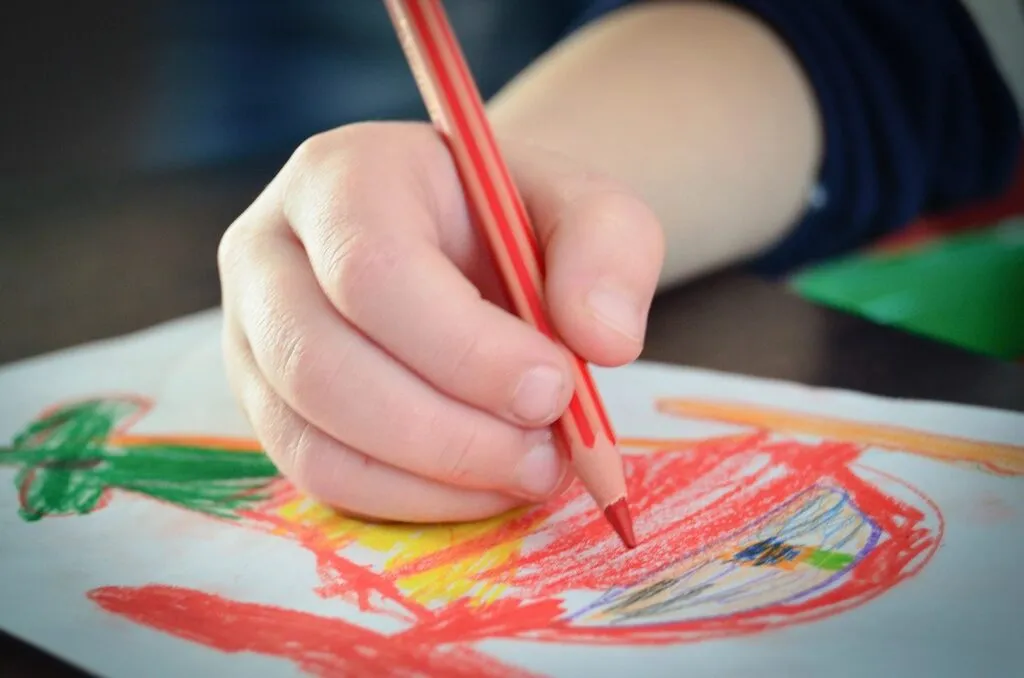
Once your child is calm, reconnect before you teach. A cuddle, a sip of water and a quiet “That was a big feeling, wasn’t it?” mend the moment. Then talk briefly about what might help next time. With a two-year-old that might be one sentence; a five-year-old can help you make a plan.
Praise the effort, not only the result: “You took three big breaths and calmed your body. That was hard, and you did it.” Children repeat what we notice.
Progress is slow and uneven, and every child learns at their own pace. At Crossmaze, celebrating every milestone, big or small, is one of our core values, and learning to calm down after a big feeling is one of the big milestones of the early years. Notice the small wins at home too.
If meltdowns are very frequent or very long, if your child often hurts themselves or others, or if you are simply worried, talk to your paediatrician about what is typical for your child.
Tour the classrooms, meet the teachers and find the right program for your child.
Pouring water, counting idlis, matching socks: simple jobs at home that build maths, language and independence, with ideas for ages 2 to 6.
Visiting preschools? What to look for in the rooms, the questions worth asking, and why your own gut feeling counts.
Calm, no-pressure ideas for the child who pushes the beans to the side: small portions, eating together and a colourful thali.